

Exam Diet Plan for Students: Healthy Foods, Smart Nutrition & Success Tips

Exams are not just a test of knowledge—they're also a test of endurance, concentration, memory, and emotional resilience. While students often spend hours revising textbooks and solving practice papers, one important factor is frequently overlooked: nutrition.
Your brain is one of the most energy-demanding organs in the body. It needs a steady supply of nutrients to stay focused, process information, and recall what you've studied. Skipping meals, relying on junk food, or consuming too much caffeine can leave students feeling tired, distracted, or anxious—exactly the opposite of what they need during exams.
A balanced diet won't magically improve marks overnight, but it can support better concentration, stable energy levels, and overall well-being, helping students perform at their best.
In this comprehensive guide, we'll explore:
Why diet matters during exams
The nutrients that support brain health
Foods that help improve concentration and energy
Healthy eating habits for exam season
Practical meal ideas for students
Common nutrition mistakes to avoid
Whether you're a parent planning meals or a student preparing for upcoming exams, this guide will help you make informed food choices.
Why Diet Matters During Exams
Preparing for exams places extra demands on the brain and body. Long hours of studying, stress, irregular schedules, and inadequate sleep can all affect performance.
A nutritious diet can help support:
Better Concentration
The brain relies on a continuous supply of energy. Balanced meals help students stay focused for longer periods without experiencing sudden energy crashes.
Improved Memory
Certain nutrients play an important role in normal brain function. Including a variety of nutrient-rich foods as part of a balanced diet supports learning and memory.
Stable Energy Levels
Sugary snacks may provide a quick burst of energy, but they are often followed by fatigue. Meals that include complex carbohydrates, protein, and healthy fats provide more sustained energy throughout the day.
Better Mood
Exam stress can affect emotions and motivation. Regular meals and healthy food choices may help maintain stable energy and support overall well-being.
Stronger Immunity
Falling ill during exam season can disrupt preparation. Eating a balanced diet rich in fruits, vegetables, and protein supports the body's normal immune function.
How Nutrition Supports Brain Performance
Although the brain accounts for only a small percentage of body weight, it requires a significant share of the body's energy.
To function effectively, the brain depends on:
Glucose from healthy carbohydrate sources
Protein for growth and repair
Healthy fats that support brain function
Vitamins and minerals that contribute to normal cognitive processes
Adequate hydration
Rather than relying on a single "brain food," students benefit most from a balanced diet that includes a variety of nutrient-rich foods.
Essential Nutrients Every Student Needs
Complex Carbohydrates
Complex carbohydrates provide a steady release of energy, helping students stay focused during long study sessions.
Healthy sources include:
Oats
Brown rice
Whole wheat chapati
Millets
Whole-grain bread
Sweet potatoes
Protein
Protein supports growth, tissue repair, and helps keep students feeling full for longer.
Good protein sources include:
Dal
Rajma
Chana
Paneer
Milk
Curd
Soy products
Eggs (for those who consume them)
Fish and lean chicken (for non-vegetarians)
Healthy Fats
Healthy fats are an important part of a balanced diet and support normal brain function.
Examples include:
Almonds
Walnuts
Peanuts
Flaxseeds
Pumpkin seeds
Sesame seeds
Consume these in moderation as part of a balanced diet.
Iron
Iron helps transport oxygen throughout the body. Inadequate iron intake may contribute to tiredness in some individuals.
Foods rich in iron include:
Spinach
Beetroot
Lentils
Chickpeas
Dates
Raisins
Pair iron-rich foods with vitamin C-rich foods like oranges or lemons to improve absorption.
Calcium
Calcium supports healthy bones, teeth, and muscle function.
Good sources include:
Milk
Curd
Paneer
Ragi
Sesame seeds
Vitamin C
Vitamin C supports the immune system and helps with iron absorption.
Sources include:
Oranges
Lemons
Guava
Amla
Kiwi
Tomatoes
B Vitamins
B vitamins help the body convert food into energy and support normal nervous system function.
Sources include:
Whole grains
Milk
Eggs
Pulses
Nuts
Green leafy vegetables
The Best Brain Foods During Exams
While no single food guarantees better grades, including a variety of nutritious foods can help students maintain energy and focus throughout exam preparation.
🥜 Almonds
A convenient snack that provides healthy fats, protein, and vitamin E.
🌰 Walnuts
Walnuts contain healthy fats and are a nutritious addition to a balanced diet.
🍌 Bananas
Rich in carbohydrates and potassium, bananas make an excellent pre-study or pre-exam snack.
🍎 Apples
High in fibre and easy to carry, apples provide a refreshing snack without excessive sugar.
🍊 Oranges
Packed with vitamin C and water, oranges help keep students refreshed and hydrated.
🥛 Milk
Milk provides protein and calcium, making it a wholesome choice for breakfast or bedtime.
🥣 Oats
Oats release energy gradually, helping students stay satisfied for longer.
🥬 Spinach
A nutrient-dense leafy vegetable rich in vitamins and minerals.
🧀 Paneer
An excellent source of protein and calcium for vegetarian students.
🫘 Lentils (Dal)
One of the best vegetarian protein sources and a staple of many balanced Indian meals.
🥣 Curd (Yogurt)
Curd provides protein and calcium while adding variety to meals.
🌾 Whole Grains
Whole grains provide complex carbohydrates that support sustained energy throughout the day.
Superfoods That Support Healthy Learning
Although the term "superfood" is often used in popular media, no single food can dramatically improve academic performance. Instead, some nutrient-rich foods can be valuable as part of a healthy diet.
These include:
Almonds
Walnuts
Pumpkin seeds
Flaxseeds
Amla
Blueberries (where available)
Spinach
Broccoli
Oats
Greek yogurt or curd
The key is variety rather than relying on one specific food.
Foods That Help Maintain Energy Throughout the Day
During exam preparation, students benefit from foods that provide sustained energy instead of quick sugar highs.
Good choices include:
Whole wheat chapati
Brown rice
Idli
Dosa
Upma
Poha
Oats
Dal
Fruits
Mixed nuts
Roasted chana
Sprouts
These foods can help students stay energized during long study sessions when eaten as part of a balanced meal.
Quick Healthy Snack Ideas
Instead of reaching for chips or sweets, try:
Banana with peanut butter
Apple slices with nuts
Roasted chana
Mixed dry fruits
Fruit salad
Sprouts chaat
Vegetable sandwich
Homemade popcorn
Yogurt with fruit
Coconut water and fruit
These snacks are easy to prepare and provide a healthier alternative to highly processed foods.
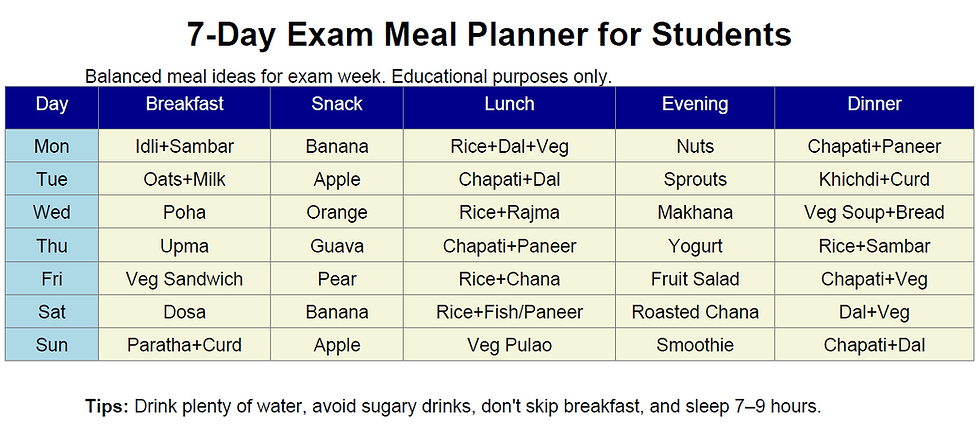
Complete Diet Plan During Exams
In this Part, we discussed why nutrition is important during exams, the nutrients every student needs, and the best foods that support concentration and sustained energy.
Now let's create a practical diet plan that parents can easily follow during exam season.
The Golden Rules of Eating During Exams
Before discussing individual meals, remember these simple rules:
✅ Never skip breakfast.
✅ Eat small, balanced meals instead of one heavy meal.
✅ Include fruits and vegetables every day.
✅ Drink plenty of water.
✅ Avoid excessive sugar and fried foods.
✅ Don't experiment with new foods during exams.
Consistency is more important than perfection.
Early Morning (6:00–7:00 AM)
After a full night's sleep, the body needs hydration and gentle nourishment.
Good choices include:
1–2 glasses of water
Warm water with lemon (optional)
A few soaked almonds (5–6)
1–2 walnuts
A few raisins or dates
These foods provide hydration and nutrients without making students feel too full before breakfast.
The Most Important Meal – Breakfast
Breakfast literally "breaks the fast" after several hours without food.
Skipping breakfast may leave students feeling tired or distracted during morning study sessions or exams.
A balanced breakfast should include carbohydrates, protein, and healthy fats.
Healthy Breakfast Options
Option 1
Idli with sambar
A glass of milk
One banana
Option 2
Vegetable upma
Curd
Seasonal fruit
Option 3
Vegetable poha
Boiled egg (optional)
Orange
Option 4
Oats cooked in milk
Mixed nuts
Apple slices
Option 5
Whole wheat vegetable sandwich
Yogurt
Fresh fruit
Mid-Morning Snack (10:30–11:00 AM)
Students studying for long hours often feel hungry before lunch.
Instead of chips or chocolates, choose nutritious snacks.
Healthy options include:
Apple
Banana
Guava
Orange
Pear
Roasted chana
Sprouts
Mixed nuts
Homemade trail mix
Yogurt
These snacks help maintain energy between meals.
A Balanced Lunch
Lunch should be satisfying without being overly heavy.
A balanced meal generally includes:
Complex carbohydrates
Protein
Vegetables
Curd
Salad
Sample Lunch
Rice or chapati
Dal
Vegetable curry
Salad
Curd
Vegetarian Option
Chapati
Paneer curry
Mixed vegetables
Dal
Salad
Non-Vegetarian Option
Chapati or rice
Grilled chicken or fish
Dal
Vegetables
Curd
Evening Snack During Study Time
Students often feel hungry while revising in the evening.
Instead of fried snacks, choose foods that provide steady energy.
Healthy snack ideas:
Fruit salad
Sprouts chaat
Homemade vegetable sandwich
Roasted makhana
Roasted peanuts
Boiled corn
Yogurt with fruit
Smoothie without added sugar
Coconut water
Dinner During Exams
Dinner should be light, nutritious, and easy to digest.
Avoid very spicy or oily meals late at night.
Good dinner ideas include:
Option 1
Chapati
Dal
Vegetable curry
Option 2
Vegetable khichdi
Curd
Option 3
Rice
Sambar
Vegetable stir-fry
Option 4
Soup
Whole wheat bread
Paneer
Before Bed
If the student feels hungry before sleeping:
A glass of warm milk
A banana
A handful of nuts
Avoid heavy meals just before bedtime.
What Should Students Eat Before an Exam?
The meal before an exam should be familiar, balanced, and easy to digest.
Good choices include:
Idli and sambar
Oats with milk
Vegetable poha
Upma
Whole wheat toast with peanut butter
Banana
Apple
Yogurt
Avoid skipping breakfast—even if you're feeling nervous.
What Should Students Eat After an Exam?
After an exam, the body and mind need to recover.
A balanced meal can help restore energy.
Suggestions:
Rice with dal and vegetables
Chapati with paneer
Fresh fruit
Coconut water
Buttermilk
Salad
If another exam is scheduled soon, continue eating balanced meals and avoid relying on fast food.
Vegetarian Exam Diet Plan
Time | Meal |
Early Morning | Water, soaked almonds, walnuts |
Breakfast | Idli + Sambar + Milk |
Mid-Morning | Banana |
Lunch | Chapati, Dal, Paneer, Salad |
Evening | Sprouts or Fruit |
Dinner | Vegetable Khichdi + Curd |
Before Bed | Warm Milk |
Non-Vegetarian Exam Diet Plan
Time | Meal |
Early Morning | Water, Almonds |
Breakfast | Oats + Milk + Egg |
Mid-Morning | Apple |
Lunch | Rice, Dal, Grilled Chicken/Fish, Vegetables |
Evening | Fruit Salad |
Dinner | Chapati, Vegetables, Fish/Chicken |
Before Bed | Warm Milk |
Stay Hydrated
Hydration is often overlooked during exam preparation.
Students should drink water regularly throughout the day rather than waiting until they feel thirsty.
Good hydration choices include:
Water
Coconut water
Lemon water
Buttermilk
Fresh fruit with high water content
Limit sugary drinks and caffeinated beverages, especially if they replace water.
Foods to Avoid During Exams
Certain foods may leave students feeling sluggish, uncomfortable, or cause sudden changes in energy levels.
It's best to limit:
Deep-fried snacks
Burgers
Pizza
Chips
Instant noodles (frequently)
Sugary soft drinks
Energy drinks
Excess chocolates
Cakes and pastries
Heavy desserts
Enjoy treats occasionally, but keep balanced meals as the priority during exam season.
Common Diet Mistakes Students Make
Many students unknowingly adopt eating habits that may affect their comfort or routine during exams.
Avoid these common mistakes:
❌ Skipping Breakfast
A missed breakfast can make it harder to stay energized through the morning.
❌ Too Much Coffee or Tea
While moderate caffeine may help some people feel alert, excessive intake can contribute to restlessness or disturb sleep.
❌ Eating Junk Food Every Day
Processed foods are often high in salt, sugar, or unhealthy fats and shouldn't replace balanced meals.
❌ Drinking Very Little Water
Keep a water bottle nearby while studying and sip regularly.
❌ Heavy Meals Before Studying
Large meals may leave some students feeling sleepy or uncomfortable.
❌ Depending on Sugary Snacks
Chocolate bars, candies, and sugary drinks provide quick energy but are often followed by an energy dip.
Choose fruits, nuts, or yogurt instead.
Quick Healthy Snacks for Busy Students
If there's little time between study sessions, try these simple options:
Banana
Apple
Mixed nuts
Roasted chana
Makhana
Yogurt
Fruit smoothie (without added sugar)
Vegetable sandwich
Boiled corn
Sprouts
Homemade energy bites made with oats and nuts
These are quick to prepare and easy to include in a study routine.
Parent's Guide, Myths, FAQs & How LIB Education Supports Student Success
A healthy exam diet is about much more than eating a few "brain foods." It is about creating consistent eating habits that support learning, concentration, and overall well-being throughout the exam season.
Parents also play an important role. The right encouragement, meal planning, and family routine can help students stay calm, healthy, and confident.
Let's look at some practical tips that can make a real difference.
Parent's Guide: Supporting Your Child During Exam Season
Parents often focus on study schedules and revision plans, but nutrition and emotional support are equally important.
Here are some simple ways to help your child.
1. Plan Meals in Advance
Exam time can be hectic. Planning meals for the week helps avoid last-minute dependence on fast food or unhealthy snacks.
Include:
Fresh fruits
Seasonal vegetables
Whole grains
Dal and pulses
Milk and dairy products
Healthy snacks
Meal planning also reduces stress for parents.
2. Don't Force Children to Eat
Some students naturally lose their appetite due to exam stress.
Instead of insisting on large meals:
Offer smaller portions.
Give nutritious snacks.
Encourage regular meal timings.
Keep hydration a priority.
3. Keep Healthy Snacks Within Reach
Replace chips and sugary snacks with healthier alternatives.
Ideas include:
Roasted chana
Mixed nuts
Fruit bowls
Yogurt
Makhana
Homemade sandwiches
Sprouts
Easy access often leads to better choices.
4. Avoid Last-Minute Food Experiments
Exam week is not the time to try unfamiliar foods or restaurants.
Stick to familiar home-cooked meals that your child enjoys and digests comfortably.
5. Make Meal Time Stress-Free
Avoid discussing marks or unfinished chapters during meals.
Instead:
Talk positively.
Encourage your child.
Help them relax.
A calm dining environment can improve appetite and reduce anxiety.
Diet Myths During Exams
Many myths circulate during exam season. Let's separate facts from fiction.
Myth 1: Students Should Drink Lots of Coffee to Stay Awake
Reality:
Too much caffeine may interfere with sleep and make some students feel restless or anxious.
Moderation is important.
Myth 2: Chocolate Improves Memory Instantly
Reality:
Chocolate is a treat—not a substitute for a balanced diet.
A small amount of dark chocolate can be enjoyed occasionally, but it won't replace consistent study habits.
Myth 3: Skipping Meals Saves Study Time
Reality:
Skipping meals may leave students feeling tired or less focused.
Balanced meals help maintain energy throughout the day.
Myth 4: Energy Drinks Improve Exam Performance
Reality:
Many energy drinks contain high amounts of sugar and caffeine.
Water, fresh fruit, milk, and balanced meals are generally better choices.
Myth 5: Students Need Expensive "Superfoods"
Reality:
Healthy Indian home-cooked meals often provide excellent nutrition.
Simple foods like dal, rice, chapati, vegetables, fruits, curd, and nuts can be part of a balanced exam diet.
A Healthy Mind Needs Healthy Habits
Although this article focuses on nutrition, food works best when combined with other healthy routines.
Encourage students to:
Get adequate sleep every night.
Stay physically active with light exercise or walking.
Take short breaks between study sessions.
Drink enough water.
Maintain a consistent study schedule.
Spend some time relaxing with family.
Good health and good study habits complement each other.
Sample Weekly Grocery List for Exam Season
Parents often ask what they should buy before exams begin.
Here's a simple shopping checklist.
Fruits
Apples
Bananas
Oranges
Guava
Papaya
Seasonal fruits
Vegetables
Spinach
Carrots
Tomatoes
Beans
Broccoli (optional)
Beetroot
Protein Sources
Dal
Rajma
Chana
Paneer
Milk
Curd
Eggs (optional)
Fish (optional)
Healthy Snacks
Almonds
Walnuts
Roasted chana
Makhana
Pumpkin seeds
Whole Grains
Oats
Brown rice
Whole wheat flour
Millets
Why Regular Study Matters More Than "Brain Foods"
Parents often search for foods that improve memory.
The truth is that there is no magic food that guarantees high marks.
Academic success comes from the combination of:
Consistent study
Regular revision
Healthy nutrition
Adequate sleep
Good guidance
Confidence
Practice
Nutrition supports learning—but it cannot replace preparation.
How LIB Education Helps Students Perform Their Best
At LIB Education, we believe that academic success is built on three strong foundations:
Quality teaching
Consistent practice
Healthy learning habits
We encourage students to develop disciplined study routines while supporting parents with practical educational guidance.
Whether a student is preparing for school examinations, board exams, or NIOS assessments, our experienced teachers focus on building conceptual understanding and confidence.
Subjects We Teach
LIB Education offers expert tuition in:
Languages
English
Hindi
Kannada
Sanskrit
French
Mathematics
From foundational concepts to advanced problem-solving, our Mathematics classes help students develop confidence and logical thinking.
Science
Our Science tuition focuses on conceptual clarity, diagrams, numerical problems, and examination preparation.
Social Science
Students receive guidance in History, Geography, Political Science, Economics, and Civics with an emphasis on understanding concepts and writing high-scoring answers.
Why Parents Trust LIB Education
Parents choose LIB Education because of our commitment to quality education and personalized learning.
Some of the reasons families choose us include:
✅ Experienced teachers
✅ Small batch sizes
✅ Individual attention
✅ Online and offline classes
✅ Flexible timings
✅ Regular assessments
✅ Doubt-clearing sessions
✅ Student-friendly learning environment
Our goal is not just better marks—but confident, independent learners.
The LIB Education Hall of Fame
Every student has the potential to achieve something remarkable.

Our Hall of Fame celebrates students who have demonstrated exceptional dedication and academic excellence.
We also recognize the teachers who guide these students, reinforcing our belief that great results are built through teamwork, commitment, and consistent effort.
By celebrating success stories, we inspire future students to aim higher and believe in their own abilities.
The LIB Education Seal of Trust
The LIB Education Seal of Trust reflects our commitment to:

Academic excellence
Honest guidance
Experienced faculty
Transparent communication
Ethical teaching practices
Student-first learning
Continuous improvement
It represents the confidence that parents place in us every day.
What Parents Say About LIB Education
Nothing speaks louder than the experiences of our students and parents.
Families appreciate LIB Education for:
Friendly teachers
Patient explanations
Individual attention
Flexible schedules
Strong communication
Improved confidence
Better academic performance
Their trust motivates us to continue delivering quality education with care and dedication.
Frequently Asked Questions (Part 1)
Does eating healthy improve exam performance?
A balanced diet supports overall health, concentration, and energy levels. Combined with regular study and adequate sleep, it can help students perform at their best.
Which fruit is good during exams?
Fruits such as bananas, apples, oranges, guava, and seasonal fruits are nutritious snack options during exam preparation.
Are dry fruits good for students?
Dry fruits and nuts can be part of a healthy diet when consumed in moderation.
Is chocolate good during exams?
Dark chocolate can be enjoyed occasionally in moderation, but it should not replace balanced meals or healthy snacks.
Should students skip meals if they are not hungry during exams?
No. Even if appetite is reduced due to stress, it's generally better to eat small, balanced meals than to skip meals altogether.
Are energy drinks recommended?
Energy drinks are generally not the best choice for students during exams because they may contain high amounts of sugar or caffeine.
Is coffee good before an exam?
Moderate coffee consumption may suit some older students or adults, but excessive caffeine can affect sleep and increase nervousness. Younger students should follow guidance from parents or healthcare professionals.
Is homemade food better during exams?
Home-cooked meals are often easier to balance with vegetables, whole grains, and protein while avoiding excessive salt, sugar, or unhealthy fats.
Can certain foods improve memory overnight?
No. Memory develops through consistent learning, revision, and healthy lifestyle habits. A balanced diet supports overall brain health but does not produce instant results.
Should students study on an empty stomach?
Generally, studying after a balanced meal or healthy snack can help maintain energy and concentration.
Is skipping breakfast harmful during exams?
Many students feel more energetic and focused after eating a balanced breakfast rather than skipping it.
How much water should students drink?
Water needs vary depending on age, activity level, and climate. Encourage students to drink water regularly throughout the day.
Are dry fruits healthy during exams?
Yes. Nuts and dry fruits can be nutritious snacks when eaten in moderation.
Are sugary energy drinks recommended?
It's generally better to choose water, milk, buttermilk, or fresh fruit instead of relying on sugary drinks.
Is homemade food better than fast food?
Home-cooked meals are usually easier to balance with vegetables, whole grains, and protein, making them a good choice during exam preparation.
Can poor eating habits affect concentration?
Nutrition is one of several factors that influence energy and concentration. Balanced meals, adequate sleep, hydration, and regular study habits all contribute to effective learning.
Final Thoughts
Exams are an important milestone, but they are only one part of a student's educational journey. A balanced diet can support concentration, energy, and overall well-being, helping students stay focused during preparation and examinations.
Simple habits—such as eating regular meals, staying hydrated, choosing nutritious snacks, and avoiding excessive junk food—can make exam season more manageable.
Remember, there is no "perfect" exam food. The goal is to maintain a balanced diet and a healthy routine while preparing consistently.
At LIB Education, we are committed to helping students succeed through expert teaching, personalized guidance, and practical advice that supports both academic achievement and overall well-being.
Together, let's build healthy habits, stronger concepts, and confident learners.
Disclaimer
This article is intended for educational and informational purposes only. It provides general nutrition guidance and is not a substitute for professional medical advice. Students with allergies, diabetes, eating disorders, or other medical conditions should consult a qualified doctor or registered dietitian for personalized dietary recommendations.
#ExamDiet #HealthyStudents #BrainFoods #ExamPreparation #StudyTips #StudentHealth #HealthyEating #BoardExams #ExamSuccess #Nutrition #ParentsGuide #LIBEducation


Comments